Raspberry Pi Pico Board
DZD 2,500
Description
Specification:
• RP2040 microcontroller chip designed by Raspberry Pi in the United Kingdom
• Dual-core Arm Cortex M0+ processor, flexible clock running up to 133 MHz
• 264KB of SRAM, and 2MB of on-board Flash memory
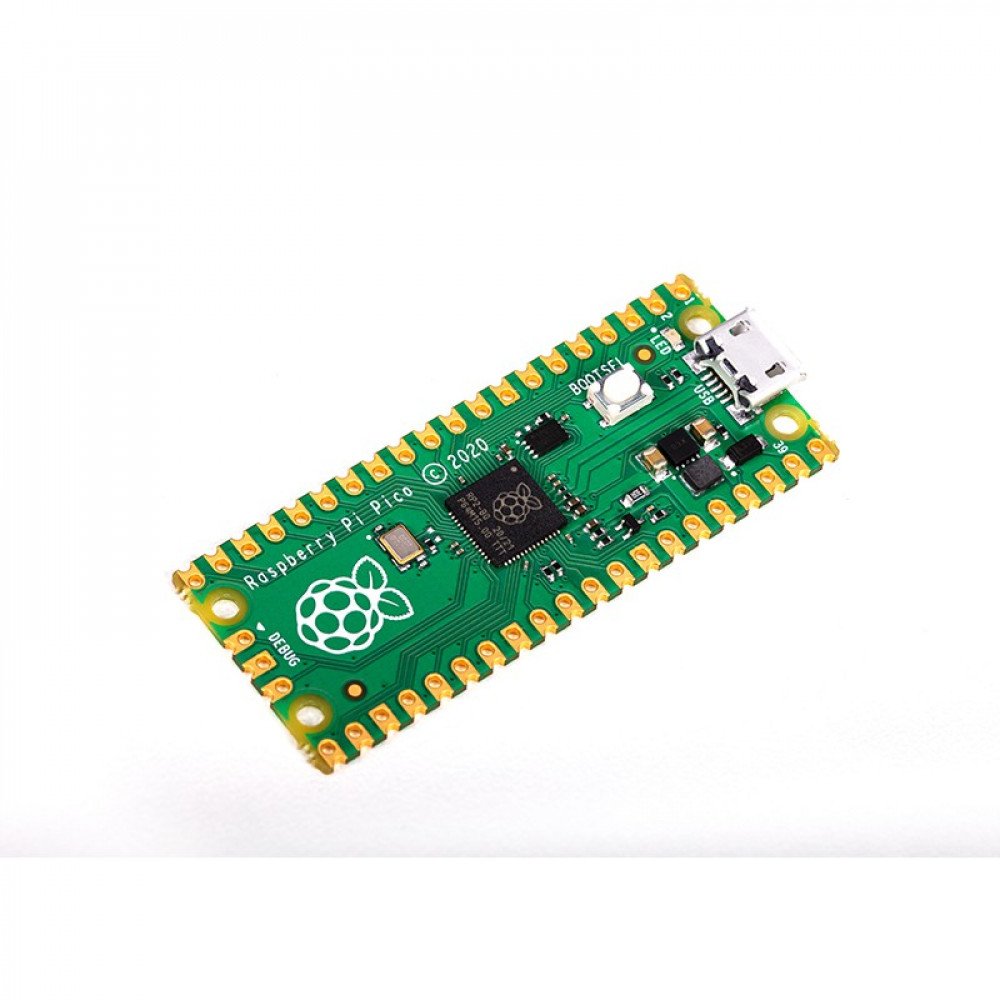
• Castellated module allows soldering direct to carrier boards
• USB 1.1 with device and host support
• Low-power sleep and dormant modes
• Drag-and-drop programming using mass storage over USB
• 26 × multi-function GPIO pins
• 2 × SPI, 2 × I2C, 2 × UART, 3 × 12-bit ADC, 16 × controllable PWM channels
• Accurate clock and timer on-chip
• Temperature sensor
• Accelerated floating-point libraries on-chip
• 8 × Programmable I/O (PIO) state machines for custom peripheral support
Introduction:
The Raspberry Pi Pico is a microcontroller board based on the Raspberry Pi RP2040 microcontroller chip. It has been designed to be a low-cost, high-performance microcontroller board with flexible digital interfaces. The Raspberry Pi Pico features two ARM Cortex-M0+ cores run up to 133MHz; 256KB RAM; 30 GPIO pins; and a broad range of interfacing options. This is paired with 2MB of onboard QSPI Flash memory for code and data storage.
In addition to powerful hardware resources, Pico has rich and complete software support and community resources. It comes with a complete Rasberry Pi official C/C++ SDK, Micropython SDK. Just clickhttps://pico.raspberrypi.org/getting-started/to get started with Raspberry Pi Pico.
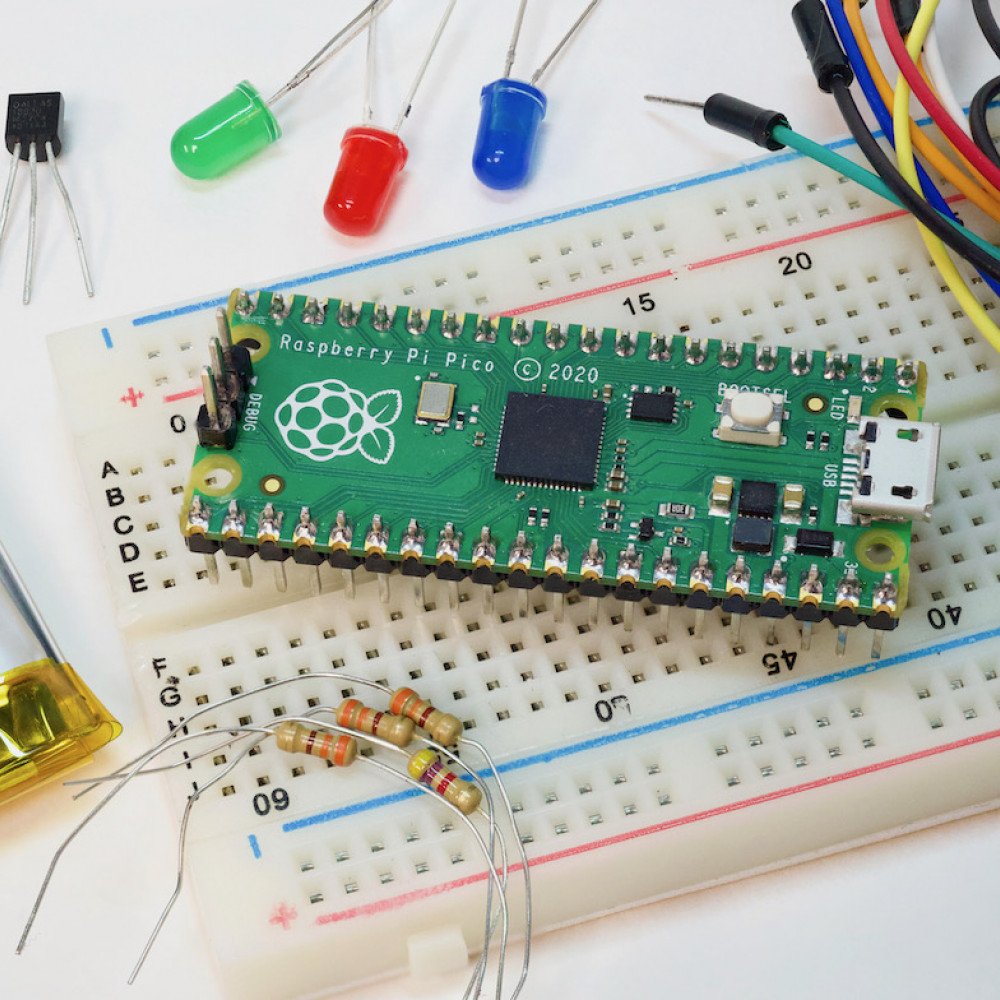
Pico has been designed to use either soldered 0.1" pin-headers (it is one 0.1" pitch wider than a standard 40-pin DIP package) or can be used as a surface-mountable 'module', as the user IO pins are also castellated. There are SMT pads underneath the USB connector and BOOTSEL button, which allow these signals to be accessed if used as a reflow soldered SMT module.